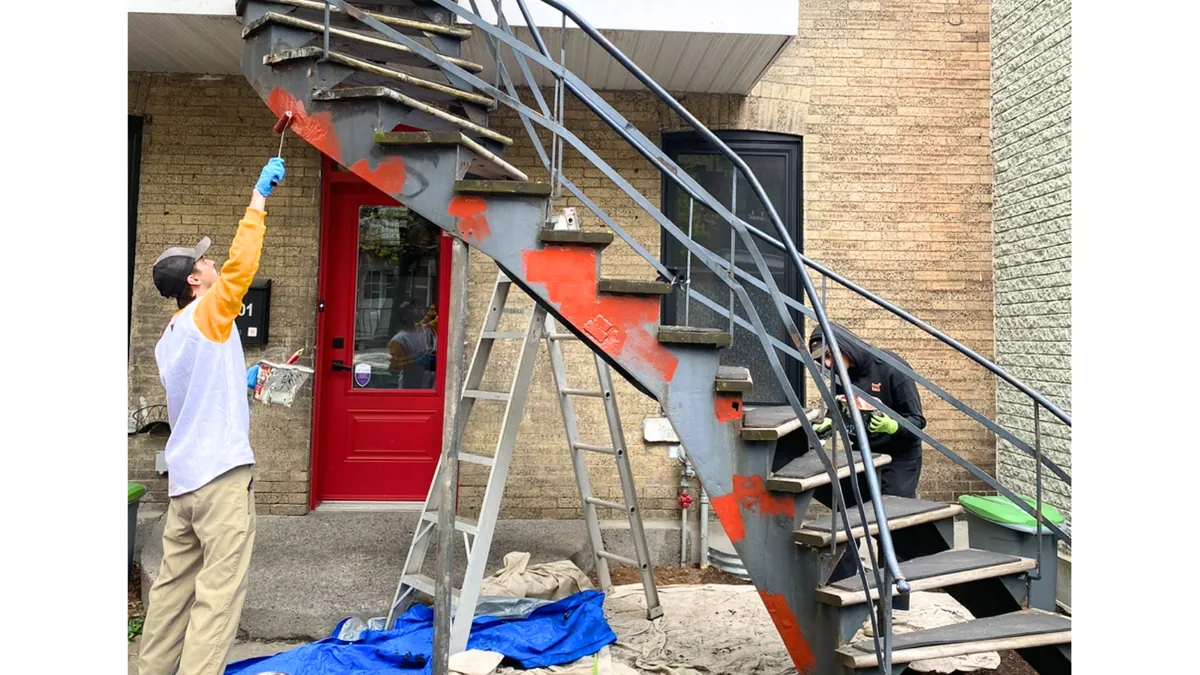
Wrought iron stairs and railings take a beating in Montreal: snow, shovelling, de-icing salt and freeze-thaw cycles. Paint is their only protection against rust. Once it fails, the metal starts to deteriorate.
Signs it is time to act
- rust spots, especially at welds, corners and on the steps;
- paint that blisters or peels;
- dull paint that feels chalky to the touch;
- orange streaks on the concrete or brick below the stairs.
The sooner you act, the less rust there is to remove, and the less the job costs.
The steps of a repaint that lasts
1. Scraping and brushing. We remove loose rust and flaking paint with a wire brush and scraper. Paint applied over loose rust will not hold.
2. Cleaning. We degrease and remove dust so the primer bonds to the metal.
3. Anti-rust primer. On every bare metal area, an exterior anti-rust primer. This is the step that makes the biggest difference over time.
4. Two finish coats. Exterior metal paint, applied in two coats, in dry weather and on a surface warm enough to avoid condensation.
How often should you repaint?
It depends on exposure. A front staircase in full sun that gets salted all winter wears faster than a sheltered one. In general, an inspection every spring and a few touch-ups as needed let you space out full repaints by several years.
Two winter tips
Avoid putting de-icing salt directly on metal steps: it speeds up corrosion. Sand or grit is gentler on the paint. And shovel with a plastic shovel rather than a metal one to avoid scratching the finish.
In older buildings, old layers of paint may contain lead. Scraping must then be done with proper precautions, which is a good reason to hire professionals.