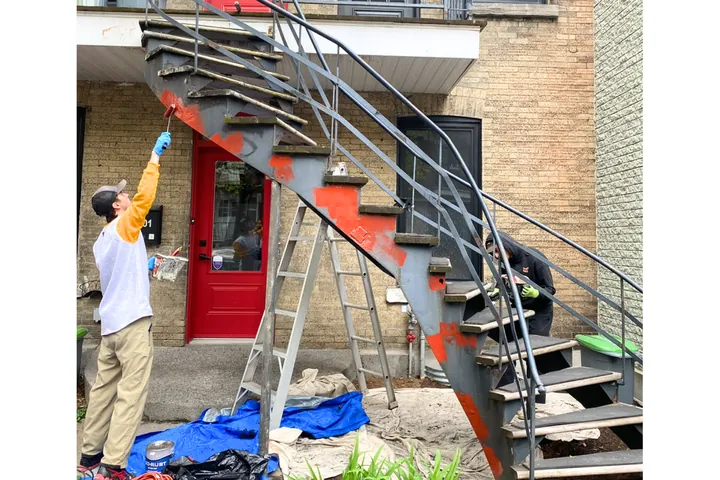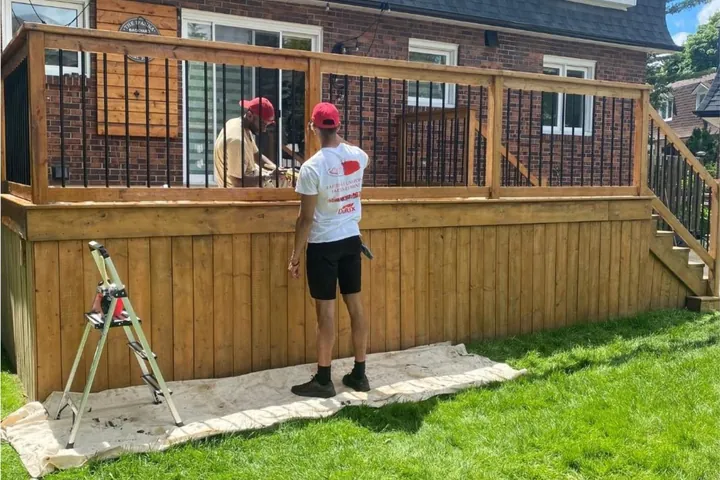
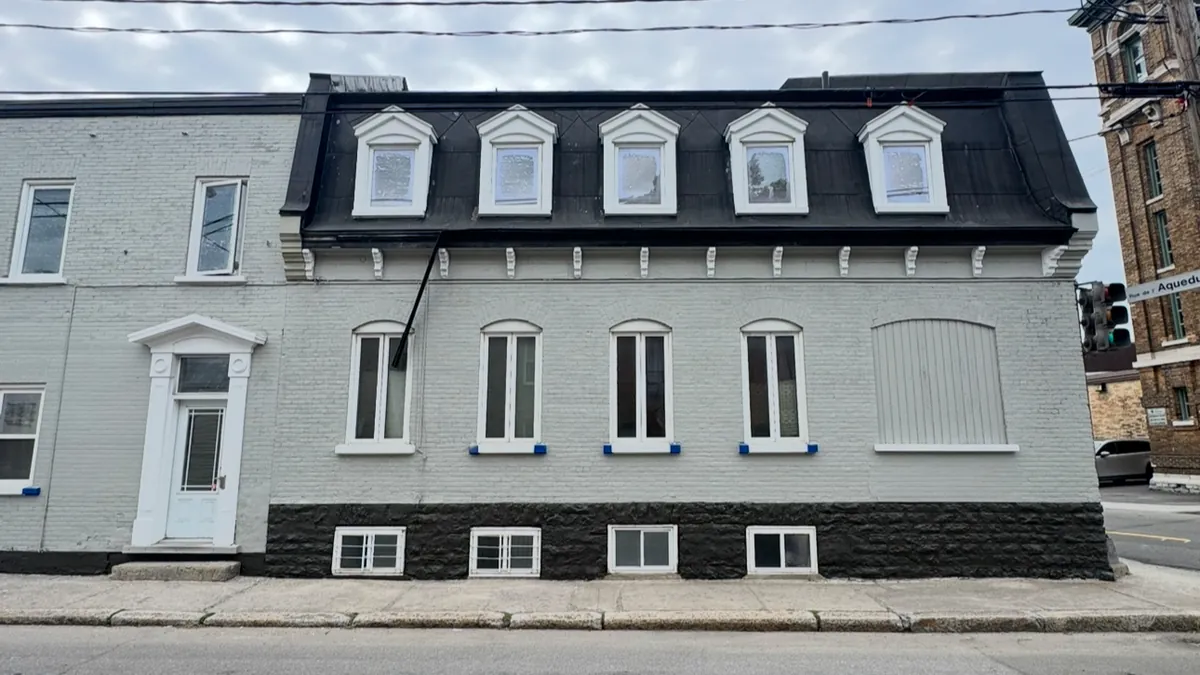
In Montreal, the exterior painting season is short. Between cold spring nights and fall dew, timing matters if you want paint to bond and last. Here is what we check before every project.
Air and surface temperature
Most exterior latex paints need at least 10 °C, both in the air and on the surface being painted. Some cold-weather formulas allow lower temperatures, but always follow what the can says. Careful: a north-facing wall can stay much colder than the air in the morning.
Nights matter too. If the temperature drops below the minimum before the paint has dried, the film may not form properly, even after a nice day.
Rain, humidity and dew
Fresh paint needs several hours without rain to dry. The most common trap is dew: in spring and fall, it forms in the evening and early morning. A surface wet with dew should not be painted, and a coat applied too late in the afternoon can get wet before it dries.
That is why, early and late in the season, we start once the dew is gone and stop earlier in the afternoon.
Direct sun
Painting a hot surface in full sun makes the paint dry too fast. The result: lap marks, weaker adhesion and sometimes blistering. We follow the shade around the house: the east side in the afternoon, the west side in the morning.
So when is the best time?
Generally from late May to early October, ideally late spring and late summer, when it is mild without extreme heat. July and August work very well too, as long as we avoid the hottest hours.
Why ask for your quote early
Because the season is short, painters’ schedules fill up quickly in spring. Asking for your quote in winter or early spring is the best way to get the date you want, especially for balconies and stairs you want ready for summer.